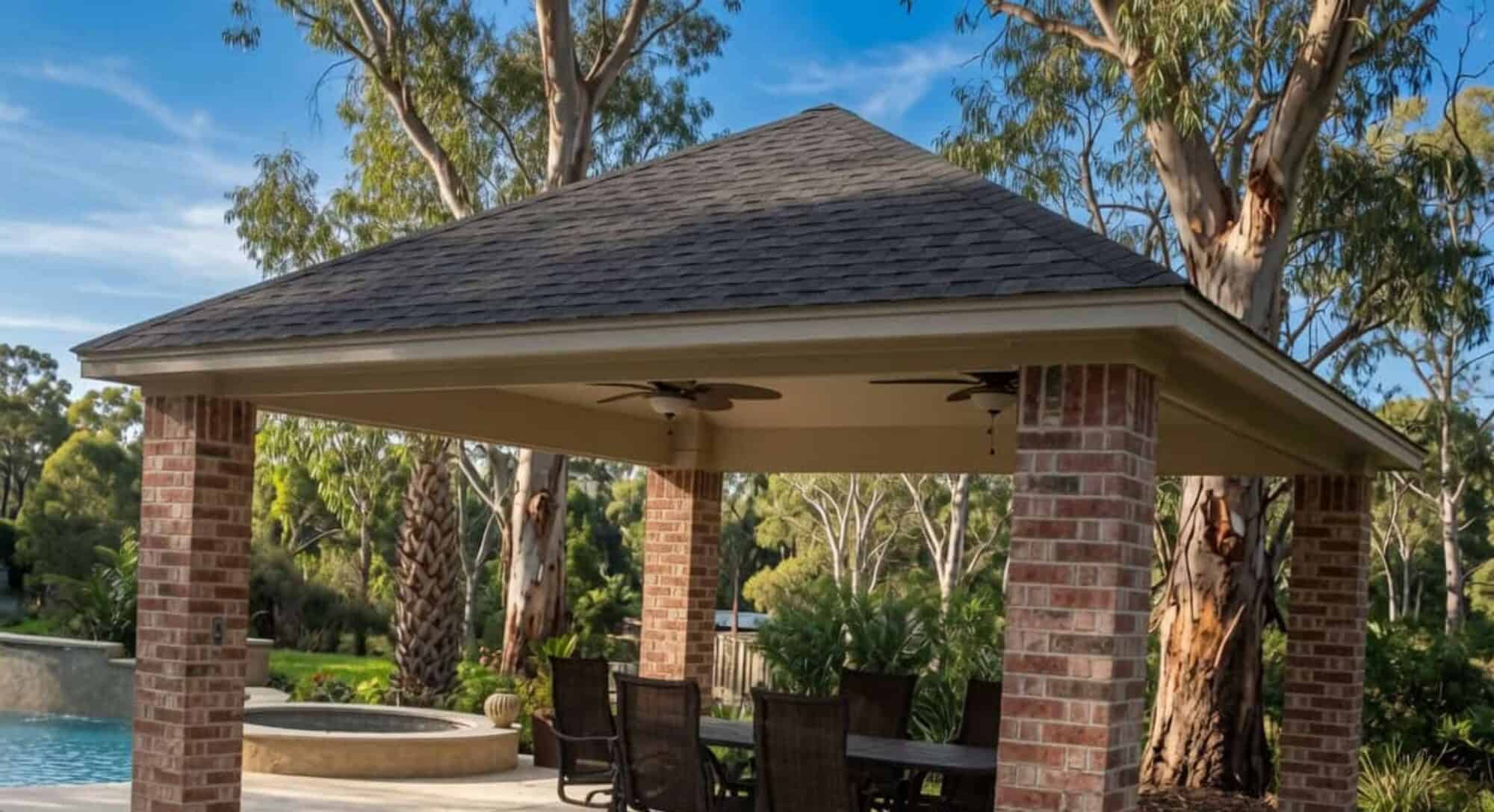

Fire-Resistant Asphalt Shingle Roofing System for BAL Zones
A Practical Performance Solution for Gazebos, Pergolas & Open Structures
Bushfire-prone areas in Australia (BAL-12.5 to BAL-18) present unique challenges for roofing — especially when homeowners want the classic look of asphalt shingles rather than metal or tile.
Standard asphalt shingle systems on plywood or OSB are no longer considered Deemed-to-Satisfy under the National Construction Code in many BAL zones. However, with the right combination of materials and proper detailing, a high-performance Performance Solution is entirely achievable.
Our fire-resistant asphalt shingle system is designed specifically for Australian bushfire zones.
This article outlines a practical, repeatable system we’ve developed that significantly improves fire and ember resistance while maintaining the aesthetic appeal of shingles.
On This Page:
The Challenge with Traditional Shingle Roofs in BAL Zones
Most conventional asphalt shingle installations use:
- Plywood or OSB decking
- Standard synthetic underlayment (e.g. Stormtite)
- Shingles on top
In bushfire conditions, embers can penetrate gaps, the underlayment can ignite, and the deck can char — creating a weak point in the roof assembly.
Our Enhanced Fire-Resistant Shingle System
We’ve engineered a layered approach specifically for open structures such as gazebos, pergolas, and carports in BAL zones:
Layered System (from bottom to top):
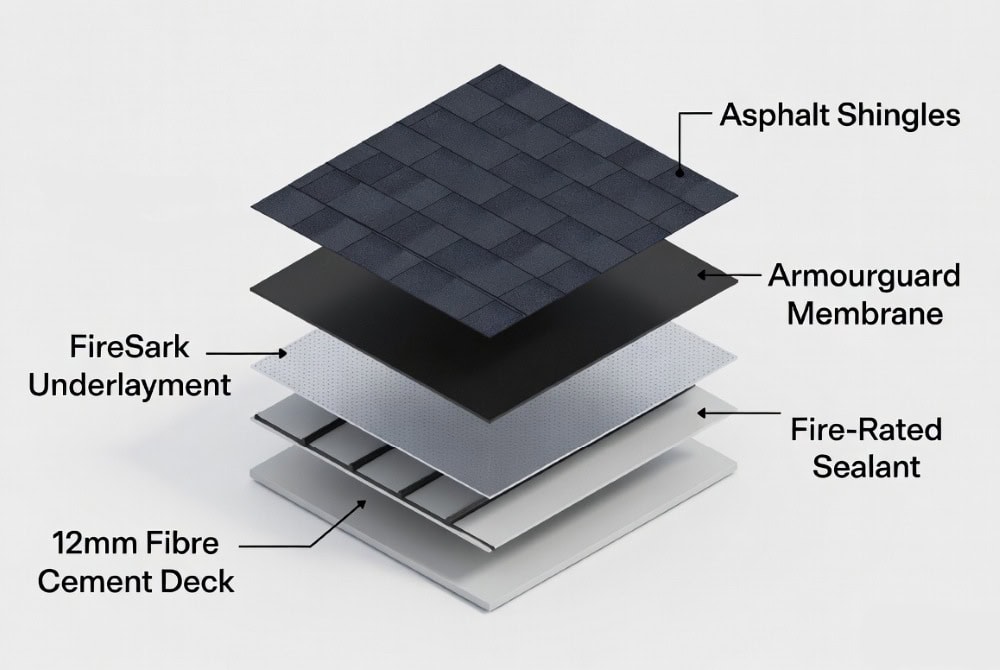
The core of this fire-resistant asphalt shingle solution is the 12mm fibre cement sheet deck.
- 12mm Fibre Cement Sheet Deck
Non-combustible structural base. Provides a solid, fire-resistant platform. - Fire-Rated Sealant on All Joints
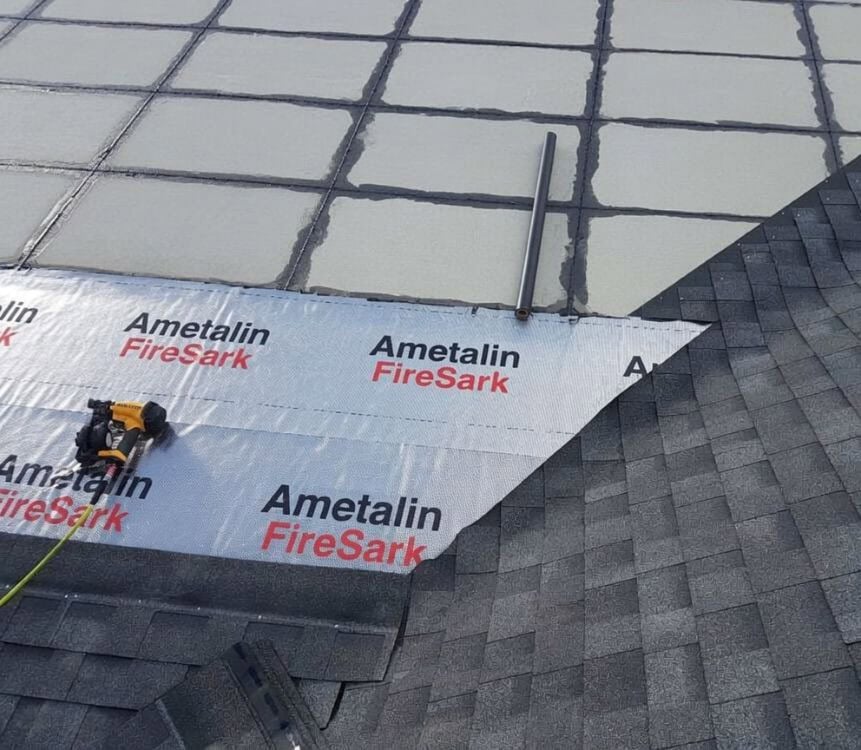
All sheet joins and edges are sealed with a high-quality fire-retardant sealant to eliminate ember entry points. - Ametalin FireSark (or CeaseFire) Fire-Retardant Sarking
A high-performance, low-flammability reflective membrane (FI ≤5) specifically designed for bushfire protection. It acts as an additional ember and radiant heat barrier. - Armourguard Self-Adhered Membrane (optional but recommended)
Adds an extra waterproof, self-sealing layer directly under the shingles. - Laminated Architectural Asphalt Shingles
Premium Class A fire-rated shingles installed as the final weatherproof and aesthetic layer.
Result: A multi-layered defence system that offers significantly better resistance to ember attack than standard shingle roofs. This fire-resistant asphalt shingle roofing system combines non-combustible materials with proven performance.
Fire-resistant asphalt shingle system showing cement sheet deck, sealed joints, Ametalin FireSark underlayment, and premium asphalt shingles.
Fire Testing Standards: Brand Test vs Australian AS 1530 Bushfire Tests
To meet both international best practice and Australian regulatory requirements, we evaluate our asphalt shingle system against two key fire testing frameworks.
Both the US Brand Test and Australian AS 1530 tests confirm the strength of this fire-resistant asphalt shingle assembly.
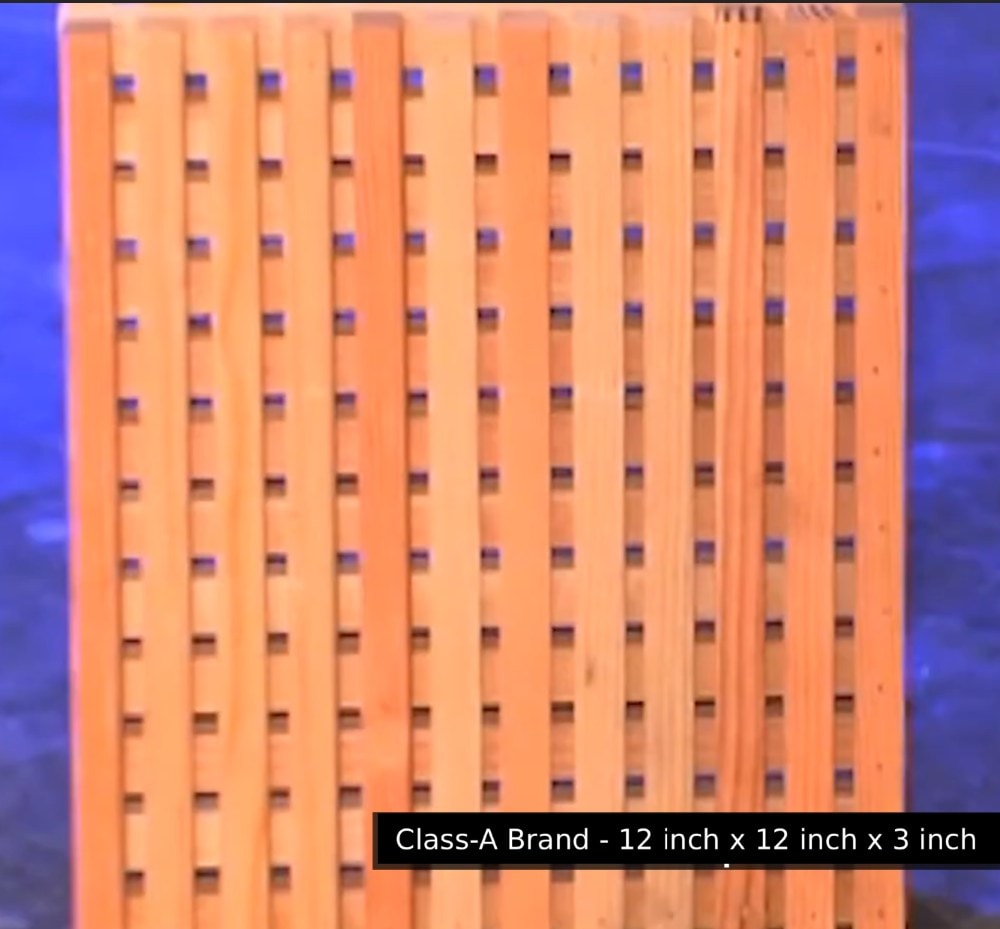
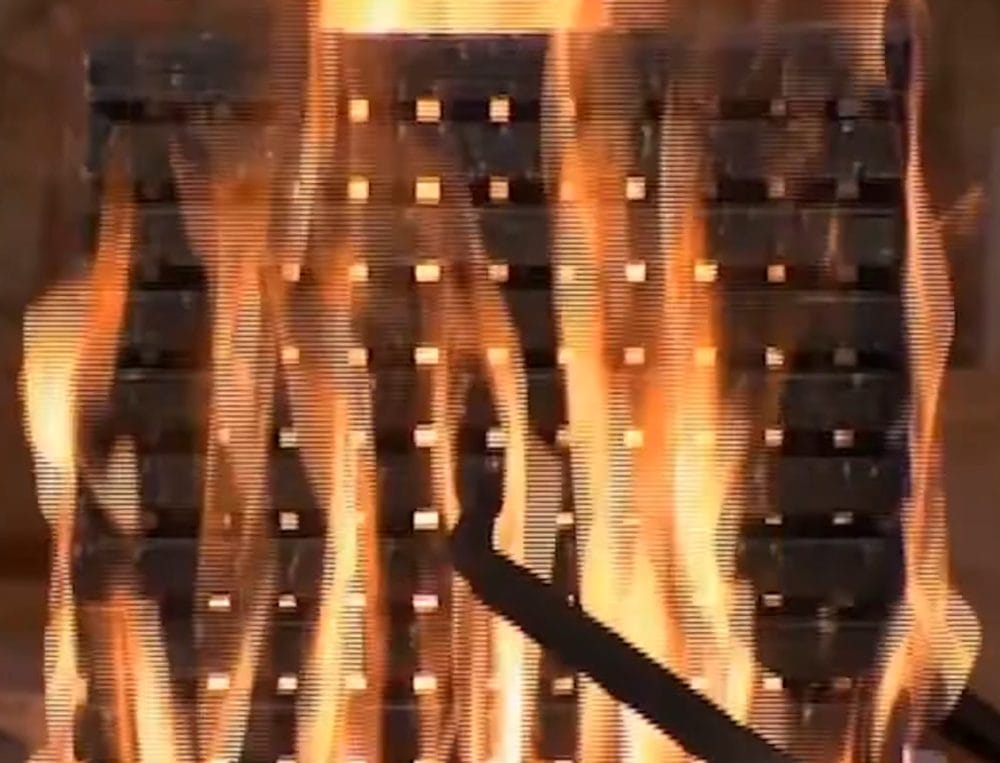
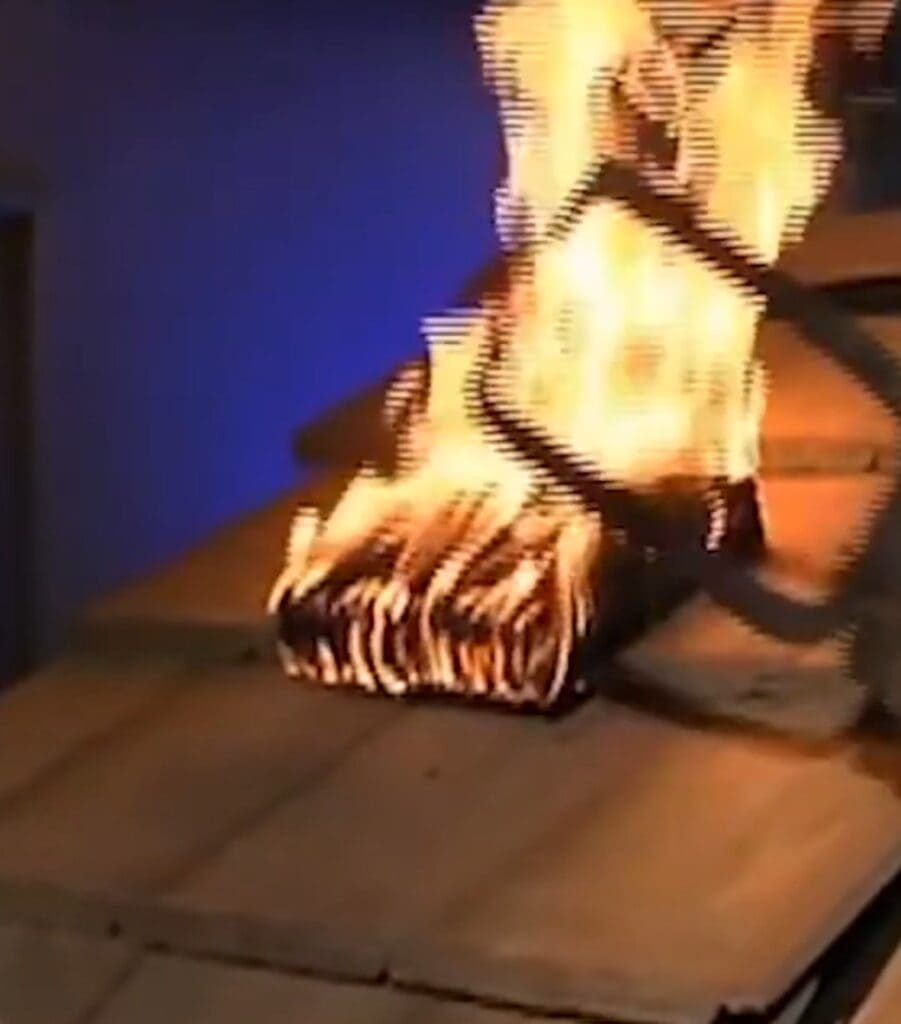
1. US Brand Test (ASTM E108 / UL 790 – Class A)
- A 12″ × 12″ × 3″ wooden lattice brand is fully ignited and placed on the roof.
- A constant 12 mph wind is applied.
- The brand must completely burn away within 90 minutes without burning through the deck.
- Result for our system: The non-combustible 12mm cement sheet deck acts as an effective barrier, preventing flame penetration even after the shingles and underlayment are exposed.
2. Australian Bushfire Standards (AS 1530.8.1 & AS 1530.8.2 + AS 3959)
- AS 1530.8.1: Tests resistance to radiant heat, small flaming sources, and ember attack — the primary threat in BAL-12.5 to BAL-40 zones.
- AS 1530.8.2: More severe testing for Flame Zone (BAL-FZ) conditions with direct flame contact.
- These tests simulate real Australian bushfire conditions far more comprehensively than radiant heat alone.
Here is a summary of the main tests used on roofing systems, both here in Australia and the US.
| Feature | US Brand Test (ASTM E108 / UL 790 Class A) | Australian AS 1530.8.1 & 8.2 (AS 3959) |
|---|---|---|
| Main Focus | Burning ember attack under wind | Ember attack + radiant heat + flame contact |
| Test Method | 12″ × 12″ × 3″ ignited wooden lattice brand | Burning cribs + radiant heat flux + small flames |
| Wind | Fixed 12 mph (19 km/h) | Variable (often higher in severe tests) |
| Duration | Up to 90 minutes | Varies by BAL level (intense short exposure) |
| Pass Criteria | No burn-through to underside of deck | No ignition, no flame penetration, limited gaps |
| Relevance to BAL Zones | Excellent simulation of ember attack | Directly used for BAL-12.5 to BAL-FZ compliance |
| Our System Advantage | Cement sheet prevents penetration | Non-combustible deck + sarking excels in ember & radiant heat tests |
Why Choose Our Fire-Resistant Asphalt Shingle System?
Here’s why builders, homeowners, and surveyors are choosing this solution for BAL-rated projects:
- Superior Ember & Fire Protection — The combination of non-combustible 12mm cement sheet, fire-retardant sarking, and quality asphalt shingles delivers excellent performance in both Brand Tests and Australian AS 1530 bushfire simulations.
- Aesthetic Appeal — Enjoy the classic look and texture of premium laminated asphalt shingles instead of being limited to metal or tile in fire zones.
- Versatile for Open Structures — Ideal for gazebos, pergolas, and patios where timber framing is exposed — especially when paired with our metal framing upgrade.
- Performance Solution Made Easy — Helps Fire Engineers and building surveyors approve projects faster with clear, repeatable construction details and supporting test data.
- Durability & Longevity — Asphalt shingles offer great weather resistance, UV stability, and a proven track record, now with enhanced fire safety.
- Cost-Effective Alternative — More affordable and lighter than many fully non-combustible roofing options while still meeting strict BAL requirements.
- Repeatable & Reliable — A complete system we can supply and install consistently across multiple projects.
Whether you need a solution for BAL-12.5, BAL-18, or higher, this fire-resistant asphalt shingle system gives you the best of both worlds — beauty and serious fire protection.
Why Cement Sheeting is the Game Changer
Traditional plywood decks can char and allow burn-through under sustained ember attack. The fire-resistant asphalt shingle system with cement sheet deck consistently outperforms traditional plywood setups.
Our 12mm fibre cement sheet option provides:
- Non-combustible structural deck
- Significantly reduced heat transfer
- Better performance in both the US Brand Test and Australian AS 1530 ember/radiant heat tests
This dual compliance approach gives building surveyors and certifiers confidence that the system can achieve a Performance Solution for BAL-rated projects.
Metal Framing for Maximum Fire Safety in Open Structures
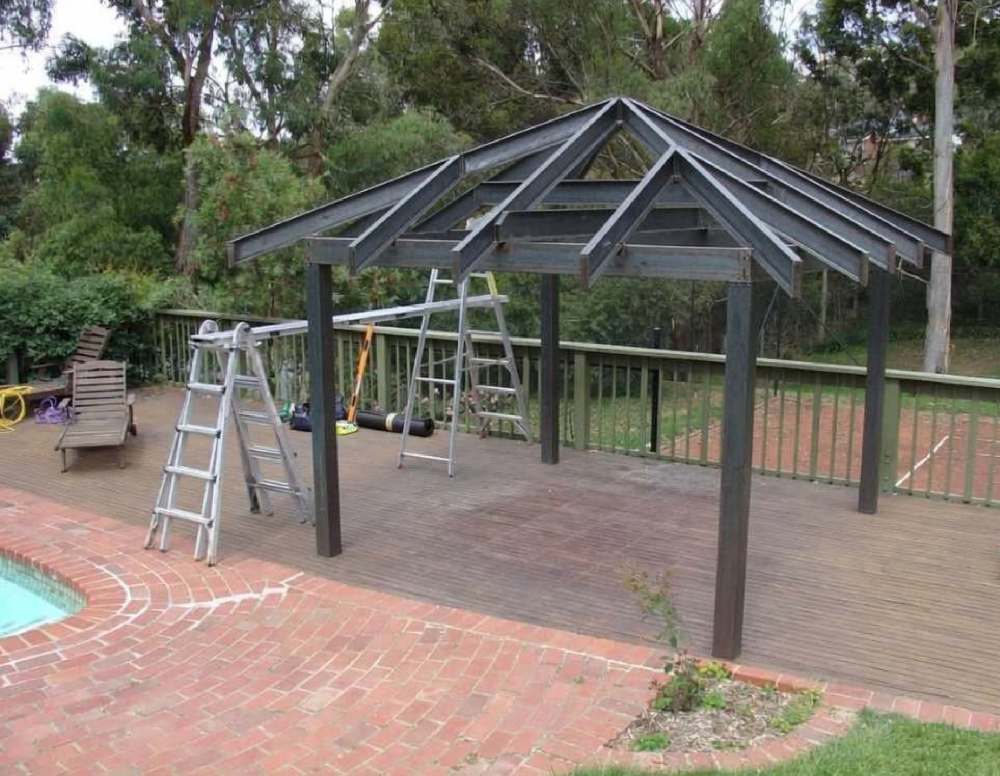
For gazebos, pergolas, and open outdoor structures, we strongly recommend pairing the fire-resistant asphalt shingle system with steel (metal) framing:
Why Metal Framing?
- Non-combustible — Unlike timber, steel does not burn or add fuel to a fire.
- Superior ember resistance — No hidden timber members that can smoulder if embers enter the roof cavity.
- Strength & durability — Ideal for open structures exposed to wind and weather.
- Long-term performance — Minimal maintenance and excellent longevity in bushfire-prone areas.
Recommended Setup
- Steel posts and rafters (typically powder-coated or galvanised for corrosion resistance).
- 12mm fibre cement sheet deck fixed to the metal rafters.
- FireSark / CeaseFire underlayment + Armourguard membrane.
- IKO laminated asphalt shingles on top.
This combination creates one of the most fire-resilient asphalt shingle-style roofs available for open structures in BAL zones.
Why This System Performs Better
- Non-combustible base (cement sheet) prevents the deck from contributing to fire spread.
- Sealed joints stop embers from getting underneath the membrane.
- Fire-rated sarking provides an additional protective layer that standard felt or basic synthetics cannot match.
- Multiple barriers mean that even if one layer is compromised, others remain effective.
This system is particularly well-suited to open structures where the roof framing is exposed and traditional enclosed-roof solutions don’t apply.
Our Fire-Resistant Asphalt Shingle Roofing System
We have developed a practical and effective fire-resistant roofing solution specifically for Australian conditions using asphalt shingles — one of the most popular and attractive roofing choices.
System Overview
Our system consists of:
- 12mm fibre cement sheet deck — Provides a non-combustible structural base
- Fire-rated sarking (e.g. Ametalin FireSark or equivalent) — Acts as an additional protective layer
- Quality laminated asphalt shingles — Installed over the sealed deck
This creates a closed roofing system with minimal gaps, significantly reducing ember ingress compared to traditional tiled roofs.Key Advantages
- Excellent performance against ember attack (the main cause of roof ignition in BAL-12.5 to BAL-18 zones)
- Maintains the classic textured look of asphalt shingles
- Works well on open structures such as gazebos and pergolas
- Pairs effectively with our optional metal framing upgrade for higher wind zones
- Helps support Performance Solution approvals when combined with proper engineering
Realistic Expectations
While no roofing system can survive a direct, prolonged, and intense bushfire attack (such as those experienced in Kinglake), our solution offers one of the stronger practical options for ember and radiant heat resistance in BAL zones. Asphalt shingles may sustain damage in extreme conditions, but the non-combustible cement sheet deck and fire-rated sarking help protect the structure beneath.
This system is designed to give homeowners and builders a beautiful roof that performs significantly better than traditional plywood + felt setups in bushfire-prone areas.
Ventilation in a Fire-Resistant Asphalt Shingle Roofing System (Home Roofing)
Proper roof space ventilation is important for temperature control, moisture management, and overall durability — even in a fire-resistant roof.
Our system incorporates fire-rated ventilation to maintain good airflow while minimising the risk of ember entry:
High-Level Exhaust Vents
- Mechanical metal roof vents or turbine vents (whirlybirds) are installed at or near the ridge.
- All vents are fitted with stainless steel or fire-resistant mesh screens (typically with maximum 2–3mm openings).
- These allow large volumes of hot air to escape depending on the size and number of vents.
Low-Level Inlet Ventilation
- Eave or soffit vents provide intake airflow.
- These are also protected with fire-resistant mesh to stop embers while allowing air to enter.
Benefits of This Approach
- Reduces heat buildup in the roof space, which helps extend the life of the sarking and shingles.
- Improves overall comfort and reduces the chance of condensation.
- Maintains ember resistance in BAL-12.5 to BAL-18 zones when correctly specified.
- Works seamlessly with both our asphalt shingle and pressed metal tile options.
All vents used in our systems are non-combustible metal construction and comply with ember guard requirements under AS 3959. In higher risk zones, we work with fire engineers to ensure the ventilation design meets Performance Solution standards.
This balanced ventilation approach ensures your roof performs well year-round while supporting the fire-resistant performance of the complete system.
Compliance Pathway
Because asphalt shingles are no longer Deemed-to-Satisfy in higher BAL zones, this assembly is submitted as a Performance Solution.
A Fire Engineer can review the system (supported by material datasheets, the layered construction, and ideally ember testing) and issue a formal report that building surveyors can accept.
Ideal Applications
- Gazebos and pergolas in BAL-12.5 to BAL-18 zones
- Open carports and outdoor living structures
- Projects where homeowners want the traditional shingle aesthetic without compromising on fire safety
Further Reading & Official Resources
For more technical details on fire testing and bushfire construction standards, we recommend these authoritative sources:
- ASTM E108 – Fire Tests of Roof Coverings – Full standard for the Brand Test and Class A roof ratings (US)
- AS 3959:2018 – Construction of buildings in bushfire-prone areas – The primary Australian standard for BAL ratings
- AS 1530.8.1 & AS 1530.8.2 – Tests for bushfire exposure – Methods for radiant heat, ember attack and flame zone testing
- IKO Technical Bulletins – Asphalt Shingle Installation – Manufacturer guidelines (including compatibility with cement decks)
- Building Code of Australia (BCA) – Performance Solutions – Guidance on alternative fire safety solutions
Next Steps & Testing
We are currently preparing documented ember attack testing of this exact assembly. Once complete, these results (along with material certificates) will be used to support Fire Engineering reports for clients.
Would you like a version of this system tailored to your specific project? We can provide detailed specifications, material lists, and work with your building surveyor or fire engineer.
Frequently Asked Questions
Is a fire-resistant asphalt shingle roof suitable for BAL zones?
Yes. Our fire-resistant asphalt shingle system is designed specifically for BAL-12.5 and BAL-18 zones. The combination of non-combustible cement sheet deck, fire-rated sarking, and quality asphalt shingles provides strong ember resistance.
How does the fire-resistant asphalt shingle system compare to traditional roofing?
Traditional plywood + felt systems are more vulnerable to ember attack. Our fire-resistant asphalt shingle solution uses a non-combustible cement sheet base, making it significantly more resistant while retaining the classic look of asphalt shingles.
Can you use a fire-resistant asphalt shingle roof on a gazebo or pergola?
Absolutely. Our fire-resistant asphalt shingle system is ideal for open structures like gazebos and pergolas, especially when paired with our optional metal framing for extra strength in high-wind areas.
Does the fire-resistant asphalt shingle system require special maintenance?
Maintenance is similar to standard asphalt shingle roofs. Regular gutter cleaning and inspections are recommended. The underlying cement sheet and fire-rated sarking add durability with minimal extra upkeep.
Is the fire-resistant asphalt shingle system more expensive than standard roofs?
It is a small premium over basic systems, but offers much better fire performance and longevity. Many clients find it more cost-effective long-term compared to full non-combustible metal or tile alternatives.
Will a fire-resistant asphalt shingle roof survive a major bushfire?
No roofing system can guarantee survival in an extreme, prolonged direct fire attack. However, our fire-resistant asphalt shingle system performs significantly better against ember attack and radiant heat than traditional roofs.
Why We Don’t Rely on Manufacturer Warranties
We believe in being completely transparent with our customers.
Over the years, many roofers and homeowners have found that manufacturer warranties on asphalt shingles (including major US brands like IKO) are often difficult to claim successfully. Common issues include:
- Heavy proration after 10–15 years
- Strict “installation condition” clauses that are hard to meet in real-world Australian conditions
- Claims on roofs 15–20 years old being routinely rejected
- Limited labour coverage and long delays in processing
Because of this, we focus on building physically robust systems rather than depending on paper warranties. Our fire-resistant asphalt shingle solution is designed around proven materials and construction methods that perform well in Australian bushfire and coastal conditions.
We stand behind our own workmanship and installation quality with a solid warranty, and we choose materials based on real performance — not marketing promises.
This approach gives our clients greater confidence and realistic expectations about how their roof will perform over time.
Conclusion & Next Steps
The combination of a fire-resistant asphalt shingle system, a non-combustible cement sheet deck, and fire-rated sarking offers a practical, attractive, and high-performance roofing solution for Australian bushfire-prone areas.
By moving beyond traditional plywood decks and embracing this enhanced system, you can achieve better ember resistance, easier surveyor approval, and the classic look of asphalt shingles — even in BAL-12.5, BAL-18, and higher risk zones.
Whether you’re building a new gazebo, pergola, or extending an existing structure, this repeatable system gives you confidence that your project meets both fire safety standards and aesthetic expectations.
Ready to build with confidence in a fire zone?
- Contact us today for a free consultation and quote.
- Let our team help you choose the right configuration (standard timber or enhanced metal + cement sheet) for your project.
- We supply and install the full fire-resistant asphalt shingle system across Australia.

Call us on 0413 742 745

Email: richard@roofing-materials.com.au

Visit our showroom or request a site assessment.
Protect your outdoor living space with a beautiful, fire-resistant roof that stands up to Australian conditions.